Smooth Moves to Full Sendoff: Ranking Video Game Animations From 'Hollywood Polish' to 'My Character Is Having a Stroke'
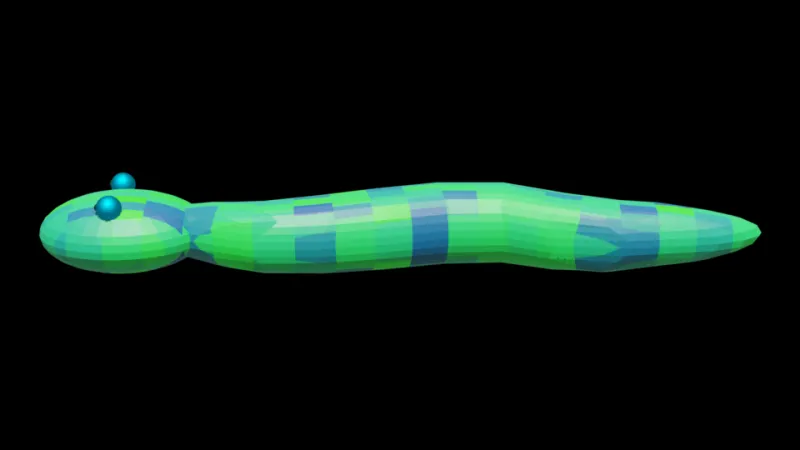
Photo: Kurtkaiser, CC0, via Wikimedia Commons
There is a specific kind of magic that happens when a video game character shakes another character's hand and their arm phases clean through a torso like a friendly ghost who never learned boundaries. It's not good game design. It's not intentional. But it absolutely lives rent-free in your brain for the next six years and gets screenshotted into a Reddit hall of fame within forty-eight hours. Animation quality in video games is one of those things you only notice at two extremes: when it's so good you forget you're looking at polygons, or when it's so bad the polygons are clearly aware they've made a terrible mistake.
Today we're doing the full tier breakdown — from the studios that clearly hired an entire Olympic gymnastics team for motion capture, all the way down to the games where someone's jaw unhinges mid-dialogue like they're about to swallow a seagull whole.
S-Tier: The Animations That Made You Forget It Was a Game
Let's start with the gold standard, the stuff that makes you pause mid-playthrough and say "wait, is this real footage?" The Last of Us Part II sits comfortably at the top of this tier. The way characters shift weight during combat, the micro-expressions during tense conversations, the genuinely nauseating physical impact of every hit — it's the kind of animation work that makes you feel things you didn't consent to feeling. Red Dead Redemption 2 also belongs here, because Arthur Morgan's horse-mounting animation alone has more personality than most games' entire casts. The man commits to getting on that horse.
Horizon Zero Dawn's Aloy deserves a mention too. Watch her scan an environment or crouch behind a rock — there's intention in every movement. She feels like a person who exists in a world, not a character who was dropped into a level.
A-Tier: Polished Enough That You Only Notice on Your Third Playthrough
This is the comfortable middle ground where most AAA games live when they actually try. Spider-Man (PS4/PS5) has web-swinging animations so fluid they're practically a love language. God of War (2018) handles the transition from combat to cutscene so seamlessly you genuinely can't find the seam. These aren't perfect — freeze-frame Kratos mid-combo and you'll find a few frames that look like he's having an argument with gravity — but in motion? Absolutely no notes.
Final Fantasy XVI also sneaks into this tier. The combat animations are theatrical in the best way, like every sword swing was choreographed by someone who watched too many anime openings and decided that was a compliment.
B-Tier: Fine in Motion, Terrifying in Screenshots
Here's where it gets interesting. B-Tier games have animation that mostly works, but the moment you pause at the wrong second, you've got a character whose face has decided to explore new geometric territory. Cyberpunk 2077 at launch was a spectacular resident of this tier — the base animations were actually pretty good, but the infamous T-posing NPCs, the characters who would casually moonwalk into traffic, the faces that occasionally rearranged themselves mid-sentence — all of it earned the game a permanent spot in the meme archive.
Mass Effect Andromeda famously lives here too. The actual gameplay animations? Surprisingly solid. The facial animations during cutscenes? A national conversation. Sara Ryder's early-build expressions became the kind of cultural touchstone that gets referenced in completely unrelated gaming discussions three years later. That's almost an achievement.
C-Tier: Jank With Personality
This is where the tier list gets genuinely fun, because C-Tier isn't just bad — it's charming bad. Bethesda games have occupied this tier for nearly two decades and have somehow turned it into a brand identity. When an NPC in Skyrim walks directly into a wall for forty-five seconds and then teleports to their destination like nothing happened, it's not a bug. It's a vibe. The community has made peace with it. Some would argue they've embraced it.
Then there's Kingdom Hearts, a series where characters stand at arm's length and have deeply emotional conversations while their hands hang at their sides like they're waiting for a bus. The facial animation barely moves. Sora is emoting with his entire soul and his face is doing approximately nothing. And yet somehow it works, because the voice acting and music carry so much weight that the stiff animation becomes almost... endearing? Kingdom Hearts gets a pass because it earned one.
D-Tier: We Need to Talk
D-Tier is reserved for games where the animation isn't charming — it's just a problem. We're talking about NPCs who sprint in place for several seconds before their pathfinding catches up with their legs. Characters who hold objects at a forty-five degree angle from their hands like they're performing a magic trick. Horses in older open-world games that would occasionally achieve vertical liftoff for no reason.
Early Sonic games in 3D had some truly ambitious animation decisions that didn't always land. Sonic's running animation in certain titles looked less like a hedgehog at top speed and more like a small blue man who had just received some very bad news and was trying to outrun it.
F-Tier: The Hall of Fame (You Know Why)
F-Tier isn't a punishment — it's a monument. These are the animations that broke the internet, spawned the memes, and became more famous than the games themselves. The Deadly Premonition coffee-drinking animation. The various Sonic '06 cutscene disasters. That one Assassin's Creed Unity glitch where NPCs' faces would load before their skin, revealing a nightmare mesh of floating eyes and teeth that no one asked for and no one has forgotten.
EA Sports games have contributed generously to this tier over the years. There is a specific FIFA goal celebration clip from roughly 2014 that remains one of the most shared gaming GIFs in history, featuring a player who appeared to be celebrating by attempting to leave his own skeleton behind.
The Real Verdict
Here's the thing about janky animation: it has a shelf life that polished animation doesn't. You forget most S-Tier moments because they blend seamlessly into the experience. But the moment a character's elbow rotates 180 degrees during a handshake in a game you paid sixty dollars for? That's a core memory. That's a story you tell at a party. That's a clip you send to your group chat with zero context at 2 AM.
The games that land in F-Tier aren't necessarily bad games. Sometimes they're beloved games with one catastrophic animation choice that the community adopted as its own. And honestly, there's something kind of beautiful about that. The jank becomes the lore. The glitch becomes the meme. The broken walk cycle becomes the reason someone still talks about a game ten years after release.
So here's to the studios that nailed it, and here's to the ones who absolutely did not — because without both, this tier list would be a lot less fun to write.