Carry or Crutch? Every Major Franchise Sidekick Ranked by Whether They're the Best Part or the Worst Decision
Carry or Crust? Every Major Franchise Sidekick Ranked by Whether They're the Best Part or the Worst Decision
The sidekick is one of fiction's oldest and most dangerous experiments. Done right, you get an iconic duo that elevates both characters. Done wrong, you get a small, annoying creature who exists to repeat the protagonist's name in a high-pitched voice and sell keychains. The margin between those two outcomes is thin, and franchises are crossing it in both directions every single year.
We've done the research. We've watched the cutscenes. We've read the comment sections. Here is SW Tier List's definitive companion tier list, spanning gaming and anime, from the sidekicks who absolutely carried their franchises to the ones who made us aggressively press the skip button.
S-Tier: These Characters Could Have Been the Main Character and We'd Have Been Fine
Pikachu (Pokémon) — The benchmark. The gold standard. The little electric mouse who turned a handheld RPG into a global cultural event. Pikachu isn't just a mascot—Pikachu IS the franchise's emotional core for millions of people who grew up with the anime. The Ash and Pikachu relationship actually had stakes, genuine tension, and real payoff moments. When Pikachu chose Ash over a perfect life with other Pikachu, kids cried. Adults cried. People who had never watched the show and only heard about it secondhand felt something. That's power. S-Tier, no discussion.
Midna (The Legend of Zelda: Twilight Princess) — Midna starts the game as an antagonistic, sarcastic, morally ambiguous gremlin who uses Link like a tool. By the end, she's one of the most compelling characters in Zelda history, and her farewell is still devastating decades later. She had an actual character arc. She had personality. She had opinions about things. She is everything a companion should be and the reason Twilight Princess still has a passionate fanbase.
Clank (Ratchet & Clank) — Clank is genuinely funny, emotionally grounded, and mechanically useful—a triple threat that most sidekicks can't even dream of achieving. He complements Ratchet's chaos energy with dry wit and actual competence. The franchise wouldn't exist without him, and not just because he's in the title.
A-Tier: Legitimately Great, With One or Two Asterisks
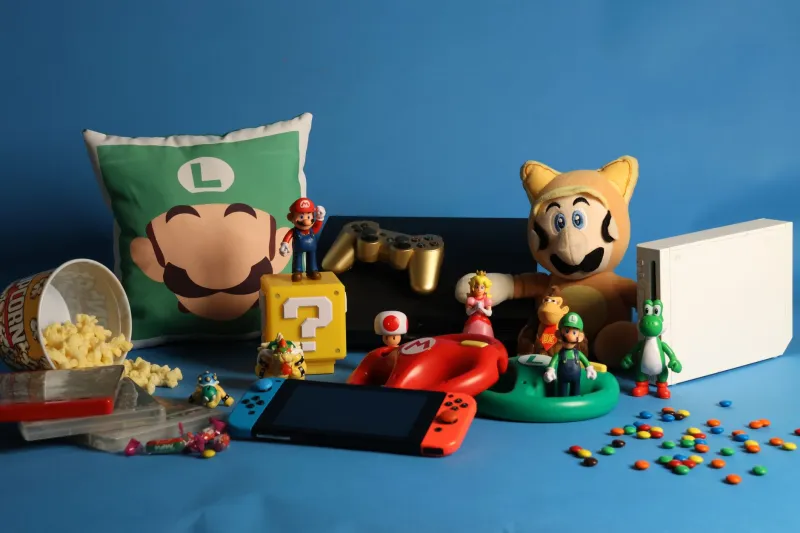
Yoshi (Super Mario) — Yoshi is beloved, versatile, and has successfully carried multiple spinoff franchises on his adorable green back. The only reason Yoshi isn't S-Tier is that his role varies wildly by game. Sometimes he's essential. Sometimes he's a power-up delivery system you forget about. Inconsistent deployment keeps him at A, but the ceiling is S and everyone knows it.
Morgana (Persona 5) — Morgana is charming, useful in combat, and provides some of the game's best comedic moments. He also tells you to go to sleep. Every night. For the entire game. It is funny the first time. It is less funny the forty-seventh time. Persona 5 is a masterpiece, and Morgana is mostly great, but the bedtime bit is a legitimate design choice that aged like warm milk.
Zero Two (Darling in the FranXX) — Zero Two is magnetic and her dynamic with Hiro is genuinely compelling for a solid stretch of the show. She's the reason the series has the fanbase it does. She is also, technically, a victim of her own show's back half, which went places that even her most dedicated defenders struggled to follow. A-Tier for the character. The writing around her is a separate conversation.
B-Tier: Fine. They're Fine. We Said What We Said.
Navi (The Legend of Zelda: Ocarina of Time) — Navi is historically unfair to rank poorly because she was doing something genuinely new in 1998. The contextual hint system was innovative. The 'Hey! Listen!' delivery was not the fault of the character concept. However, 'Hey! Listen!' has become such a universal shorthand for annoying game companions that Navi cannot escape its shadow. B-Tier for historical significance and lingering trauma.
Tails (Sonic the Hedgehog) — Tails in the classic era? Legitimately lovable. Tails in the modern era? A genius who somehow cannot solve a single problem without Sonic's permission, despite being a literal child inventor who built a biplane. The character has been gradually defanged by decades of inconsistent writing until he's basically just a worried face standing next to the action. We miss capable Tails. Bring back capable Tails.
Otus (Owlboy) — Otus is a protagonist rather than a sidekick, but his companions rotate and vary in usefulness so dramatically that the whole system lands in B-Tier by averaging out. Some of them are excellent. Some of them exist.
C-Tier: Merchandising Decisions Wearing a Character Costume
Slippy Toad (Star Fox) — Slippy Toad's primary gameplay function is to get shot down and require rescue, which then exposes you to enemy fire, which means Slippy is actively making your life worse while ostensibly being on your team. His presence in the lore is justified by his mechanical expertise. His presence in actual missions is justified by nothing. C-Tier, generously.
Jar Jar Binks (Star Wars games, various) — Yes, he counts. Jar Jar has appeared in enough Star Wars games to qualify, and his inclusion in anything has historically been a yellow flag that someone prioritized toy sales over narrative coherence. The internet's 'Darth Jar Jar' theory is more compelling than anything the character actually does in official media, and that should tell you everything.
Bubsy (Bubsy series) — Technically the protagonist of his own franchise, but Bubsy functions as a sidekick to the concept of 'bad mascot design' and he performs that role admirably. His entire existence is a cautionary tale.
D-Tier: The Companions Who Made Us Question Our Choices
Fi (The Legend of Zelda: Skyward Sword) — Fi is statistically the most information-dense companion in Zelda history, which would be great if any of the information she provided wasn't something you already knew, were currently doing, or had explicitly just been told by someone else. Fi will inform you that your batteries are low. Fi will note that the door ahead appears to be a door. Fi will calculate the probability that you are playing a video game. Fi means well. Fi is exhausting.
Sonic's Extended Friend Group (Post-2000) — Wave the Swallow. Jet the Hawk. Silver the Hedgehog. Marine the Raccoon. Characters introduced with apparent confidence and then abandoned or quietly shuffled to the background when they didn't connect with audiences. The Sonic franchise has a companion graveyard, and it is vast and strange and worth a separate article entirely.
The Final Word
The best sidekicks share one quality: they make you care about them independently of the main character. Pikachu matters on his own terms. Midna has her own story. Clank has his own goals. The moment a companion exists purely to react to the protagonist or explain mechanics, they've crossed from character into furniture.
Franchises that understand this produce duos for the ages. Franchises that don't produce Slippy Toad.
We rest our case.